
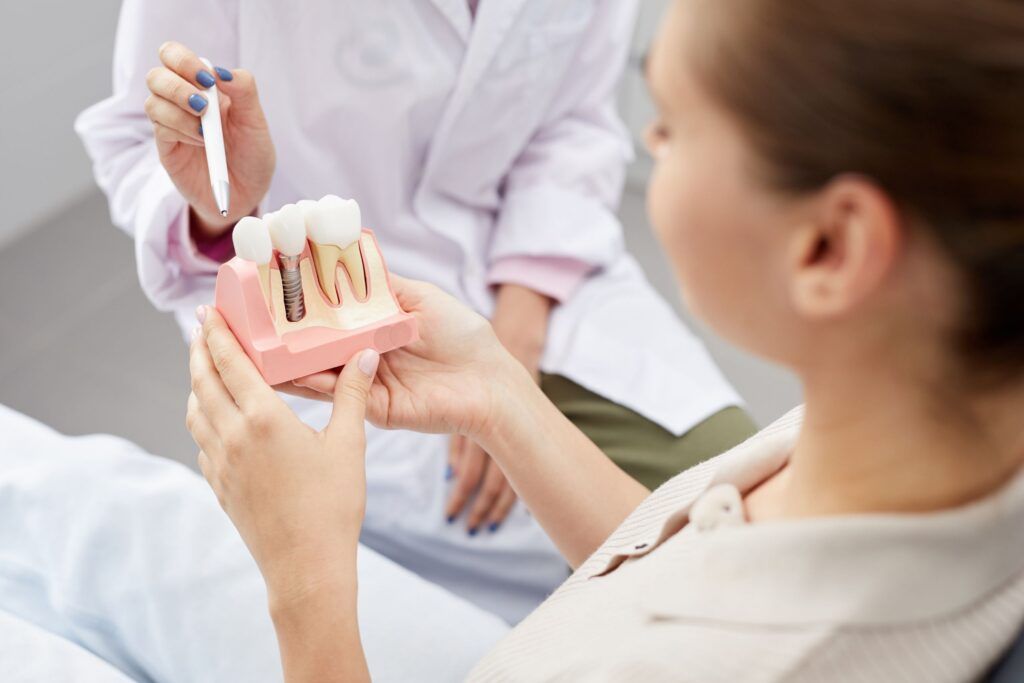
Learning that you need a dental crown often comes with questions about what happens next. Crowns are available in different materials, and the right choice depends on the tooth’s location, the strength it needs, and what you want the finished restoration to look like. Understanding those differences can help you feel more confident when discussing your treatment options with your dentist.
At Lumiere Dental in Wicker Park, Chicago, our team is committed to making restorative dentistry straightforward and stress-free. Led by Dr. Ryan Woitas, DMD, our practice combines advanced technology with a patient-first approach, so you leave every appointment feeling heard and well cared for. Explore our full range of dental services to see how we can help restore and protect your smile.
What Is a Dental Crown?
A dental crown is a tooth-shaped cap that fits over a damaged or weakened tooth to restore its shape, strength, and function. It completely covers the visible portion of the tooth above the gumline, holding the remaining structure together and protecting it from further damage. According to the American Dental Association’s MouthHealthy resource, crowns are used to strengthen teeth with large fillings, protect weak teeth from breaking, and cover dental implants, among other common applications.
Crowns are typically recommended when extensive decay cannot be addressed with a standard filling, following a root canal treatment, or when a tooth is cracked or severely worn down. They are also used when a dental implant needs a permanent restoration placed on top. If your dentist has recommended a crown, it is because the underlying tooth needs more support than a filling alone can provide.
Types of Dental Crowns
Not all crowns are the same. The right type for you depends on the tooth’s location, your bite, and your aesthetic priorities. Here is a quick look at the most common options:
- Porcelain-fused-to-metal (PFM): A metal base with a tooth-colored porcelain exterior, offering a balance of strength and aesthetics. A thin gray line may appear at the gumline over time.
- All-ceramic or all-porcelain: The most natural-looking option for front teeth, mimicking the translucency of natural enamel without any metal.
- Zirconia: Exceptionally strong and tooth-colored, making it suitable for both front and back teeth. It resists chipping better than traditional porcelain.
- Full metal: Gold or other metal alloys are the most durable choice for back molars. Patients often choose them for their longevity and the minimal amount of tooth structure that needs to be removed.
Each type has its advantages, and your dentist will help you weigh appearance, durability, and cost based on where the crown is placed in your mouth. For patients who feel anxious about the process, sedation dentistry can make the entire appointment more comfortable.
Choosing the Right Crown Material
Crown material is one of the most important factors in determining how long your restoration lasts and how natural it looks. For front teeth, all-ceramic and zirconia options are typically preferred because they blend naturally with surrounding enamel. If you are also considering cosmetic improvements to neighboring teeth, porcelain veneers may be worth discussing alongside your crown treatment.
At Lumiere Dental, we take a biomimetic approach to dentistry, which means we focus on preserving as much of your natural tooth structure as possible when placing a crown. In many cases, this approach can reduce the amount of tooth preparation needed, which is better for long-term dental health. Our goal is always to choose the material that performs best for your specific bite, lifestyle, and aesthetic needs.
What Do Dental Crowns Cost?
Dental crown costs vary depending on the material used, the complexity of the case, and your dental insurance coverage. All-ceramic and zirconia crowns tend to cost more than PFM or metal options due to the materials and lab work involved. Most dental insurance plans cover a portion of the cost when a crown is deemed medically necessary, though coverage levels vary by plan.
We accept major PPO insurance plans at Lumiere Dental, and we also offer flexible financing through CareCredit, Cherry, FSA and HSA funds, and in-house payment options, so cost does not stand in the way of the care you need. Our team is happy to walk you through your coverage and payment options before any treatment begins, so there are no surprises.
Get Your Dental Crown at Lumiere Dental
Dr. Ryan Woitas, DMD, has completed over 100 continuing education hours with a focus on restorative and biomimetic dentistry and is a member of five professional dental associations, including the ADA and ISDS. As a doctor-owned, family-run practice, Lumiere Dental prioritizes quality care over convenience, meaning every crown case is personally overseen by Dr. Woitas using state-of-the-art imaging and digital treatment planning.
If you have been told you need a crown, or you have a tooth that has been bothering you, we are here to help you understand your options. Contact us to schedule a consultation at our Wicker Park office and take the first step toward a stronger, healthier smile.