
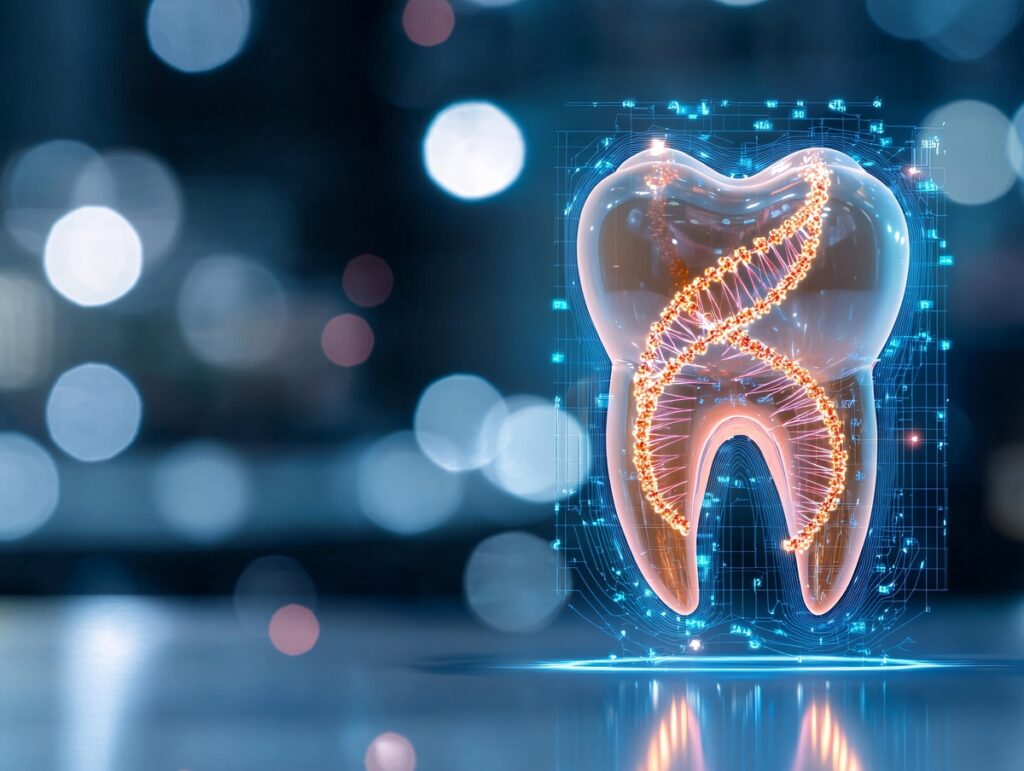
Biomimetic dentistry represents a revolutionary approach to dental care that mimics nature’s own design, preserving as much of your natural tooth structure as possible while restoring strength and function. This advanced technique focuses on replicating the natural properties of teeth, offering a conservative alternative to traditional restorative methods that often require more aggressive removal of healthy tooth material.
At Lumiere Dental, Dr. Ryan Woitas brings this cutting-edge approach to patients throughout Chicago who want restorations that protect their long-term oral health, not just their immediate appearance.
Understanding Biomimetic Dentistry Principles
Biomimetic dentistry literally means “mimicking life,” and this philosophy drives every aspect of treatment. Traditional dentistry often involves removing significant portions of healthy tooth structure to accommodate large fillings or crowns. Biomimetic techniques instead focus on bonding materials that behave like natural tooth enamel and dentin.
The approach recognizes that your natural teeth have evolved over millions of years to handle the complex forces of chewing, so restorations that mimic those natural properties tend to hold up better over time than materials that behave very differently from tooth structure.
The Science Behind Biomimetic Materials
Modern biomimetic materials possess properties remarkably similar to natural tooth structure. These materials expand and contract at rates similar to your natural teeth, preventing the stress fractures common with traditional materials. The American Dental Association notes how plaque constantly forms on teeth and creates acids that attack enamel, making the preservation of healthy tooth structure crucial for long-term oral health.
How Biomimetic Dentistry Saves Natural Teeth
The primary benefit of biomimetic dentistry lies in its conservative approach. Instead of removing large amounts of healthy tooth structure to place traditional crowns, biomimetic techniques often preserve 60-80% more of your natural tooth. This preservation maintains the tooth’s natural strength and vitality.
Several key advantages make biomimetic dentistry superior for tooth preservation:
- Minimal removal of healthy tooth structure during treatment
- A stronger bond between restoration and natural tooth reduces failure rates
- Materials that flex with natural tooth movement prevent stress fractures
- Sealed margins prevent bacterial infiltration and secondary decay
- Maintains natural tooth sensitivity and pulp vitality in most cases
These benefits translate into longer-lasting restorations and healthier teeth that may never require more aggressive treatments like root canals or full crowns.
Biomimetic vs. Traditional Dental Approaches
Traditional dental approaches often follow a “drill and fill” mentality, removing decay along with significant healthy tooth structure to create retention for fillings. This removal weakens the tooth and may eventually require crowns or other extensive treatments as problems develop over time.
Biomimetic dentistry takes a different approach by removing only the diseased or damaged tissue while preserving all healthy tooth structure. For a closer look at the specific bonding techniques used in this process, see our page on how biomimetic dentistry preserves your natural tooth structure.
Long-Term Benefits
Patients who choose biomimetic treatments often experience fewer dental problems over their lifetime. The conservative approach means teeth retain their natural strength and function, reducing the likelihood of future complications. Many biomimetic restorations last for decades without requiring replacement or additional treatment.
The technique also preserves the tooth’s natural appearance better than traditional methods, since less tooth structure is removed and the restoration can be closely matched to your surrounding teeth.
Conditions Treated with Biomimetic Dentistry
Biomimetic techniques can address a wide range of dental problems while preserving natural tooth structure. Cavities, cracked teeth, worn enamel, and even some situations that might otherwise require a root canal can often be treated with biomimetic approaches. The key is early intervention before problems become too extensive.
Dr. Woitas evaluates each case individually to determine if biomimetic treatment is appropriate. Factors like the extent of damage, location of the problem, and your overall oral health all factor into the recommendation.
Experience Biomimetic Dentistry at Lumiere Dental
Dr. Ryan Woitas has completed over 100 hours of continuing education and maintains affiliations with five professional associations, ensuring he stays current with the latest biomimetic techniques and materials. Our owner-operated practice combines this advanced training with state-of-the-art technology, providing Chicago patients with the most conservative and effective treatment options available.
Frequently Asked Questions About Biomimetic Dentistry
Is biomimetic dentistry more expensive than traditional treatment?
Costs can vary by case, but the conservative approach often reduces the need for more extensive (and expensive) treatments like crowns or root canals later on, which can offset the initial investment over time.
How much of my natural tooth can biomimetic dentistry preserve?
Biomimetic techniques often preserve 60 to 80 percent more healthy tooth structure compared to traditional crown preparation, depending on the extent of the original damage.
Can biomimetic dentistry help me avoid a root canal?
In some cases, yes, particularly with early intervention. Preserving healthy tooth structure and sealing it properly can reduce the risk of decay reaching the tooth’s pulp.
How long do biomimetic restorations typically last?
Many biomimetic restorations last for decades without needing replacement, thanks to the strong bond between the restoration and the remaining natural tooth structure.
Is biomimetic dentistry only for front teeth?
No, biomimetic techniques work well for both front and back teeth and can address a range of issues from minor decay to more extensive damage.