
You brush twice a day, floss regularly, and keep up with your dental visits, yet your teeth still show signs of wearing down. Maybe you have noticed a tooth looks shorter than it used to, or your gums have pulled back along certain teeth, leaving roots exposed and sensitive. These changes can feel alarming, especially when your oral hygiene routine seems solid. In many cases, the issue is not about how you care for your teeth. It is about how your teeth come together when you close your mouth.
At Lumiere Dental, Dr. Ryan Woitas, DMD, evaluates bite alignment as part of every comprehensive exam because the position of your teeth directly affects how force distributes across your smile. Our Invisalign clear aligner therapy corrects these alignment issues gradually and comfortably, often addressing the root cause of wear and recession rather than simply treating the symptoms. As a doctor-owned, family-run practice in Wicker Park, we take the time to identify what is actually driving the damage before recommending any treatment.
How a Misaligned Bite Affects Your Teeth and Gums
When your upper and lower teeth do not align properly, a condition called malocclusion, certain teeth absorb more force than they should during chewing and clenching. Over time, this uneven pressure grinds down enamel on the overloaded teeth, creating flat spots, chips, or visible shortening. Research published in Frontiers in Oral Health found a significant association between malocclusion and tooth wear, confirming what dentists observe clinically every day.
Gum recession follows a similar pattern. Teeth that are crowded, rotated, or tilted place stress on the surrounding bone and gum tissue. When the periodontium, the tissue and bone supporting each tooth, is under chronic strain, it begins to break down. The gum line recedes, exposing the root surface that lacks the protective enamel covering the rest of the tooth. This is why some patients experience persistent sensitivity in specific areas even though their overall oral health is strong.
The Role of Clenching and Grinding
Bite misalignment also increases the likelihood of bruxism, the habit of grinding or clenching your teeth, especially at night. Bruxism compounds wear and recession because it applies forces far beyond what normal chewing generates. Correcting the bite can significantly reduce these destructive forces.
Signs Your Bite May Be Contributing to Damage
Not all tooth wear and gum recession come from a misaligned bite, but several specific indicators point to an alignment issue as the underlying cause. If you are experiencing any of the following, your bite may need evaluation:
- Flat, worn, or chipped edges on your front teeth not caused by injury
- Gum recession concentrated on one or two teeth rather than spread evenly across your smile
- Jaw soreness, clicking, or tension, particularly in the morning
- Tooth sensitivity in areas where the gum line has visibly shifted
- Uneven pressure or discomfort when you bite down on food
When these signs appear together, they often form a pattern pointing to how your teeth meet rather than to brushing habits or gum disease alone.
How Invisalign Addresses Bite-Related Wear and Recession
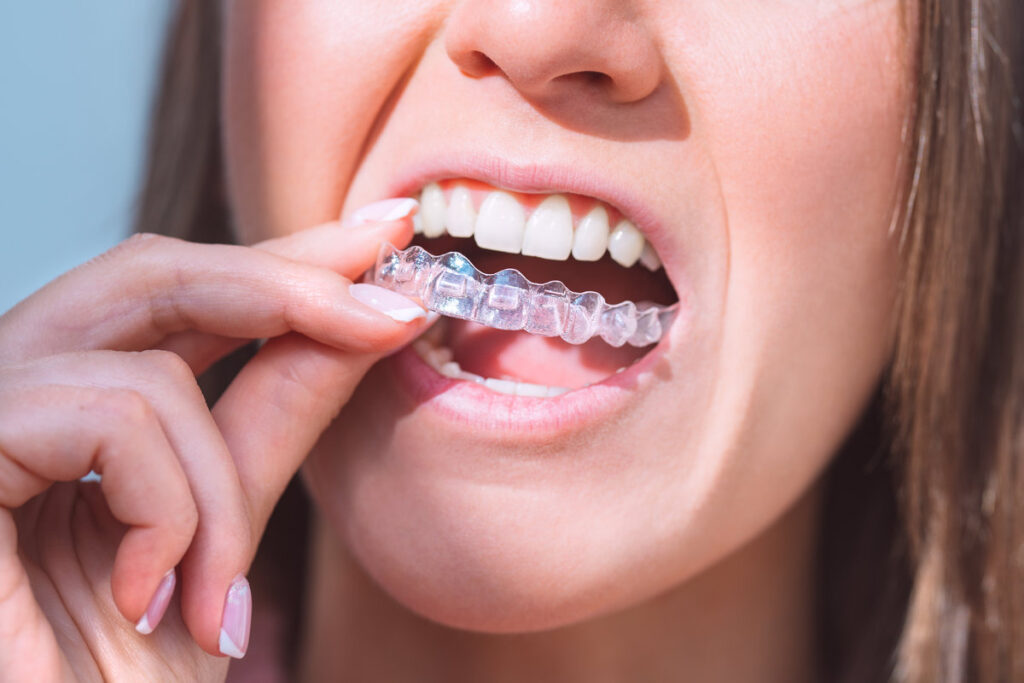
Invisalign works by repositioning teeth into proper alignment using a series of custom-made, removable clear aligners. Unlike traditional braces, the aligners are virtually invisible and can be removed for eating and brushing. More importantly for patients dealing with wear and recession, Invisalign corrects the bite relationship itself, redistributing force more evenly across every tooth.
Dr. Woitas uses digital imaging to map your bite and create a treatment plan addressing the specific teeth causing uneven pressure. Because our practice follows a biomimetic approach focused on preserving natural tooth structure, aligning your bite with Invisalign fits naturally into a broader strategy of preventing future damage rather than simply repairing what has already occurred.
Addressing Existing Damage Alongside Alignment
For patients whose wear or recession has already progressed, alignment correction is often the first step before any restorative or cosmetic work. Placing veneers or bonding on teeth that still carry an unbalanced bite is likely to result in repeated damage. Correcting the alignment first creates a stable foundation for any additional treatment.
Protect Your Smile at Lumiere Dental
Tooth wear and gum recession caused by bite misalignment are progressive conditions, meaning they will continue to worsen without intervention. At Lumiere Dental, Dr. Woitas combines over 100 hours of continuing education, GBT certification, and membership in five professional dental associations to deliver comprehensive care rooted in long-term prevention. Our non-corporate, patient-centered approach means every treatment plan is built around your specific needs, not a one-size-fits-all protocol.
If you have noticed signs of wear or recession and want to find out whether your bite is contributing to the problem, we are here to help. Reach out to our Wicker Park team today to schedule a comprehensive evaluation and learn how Invisalign may be able to protect your smile for the long term.