
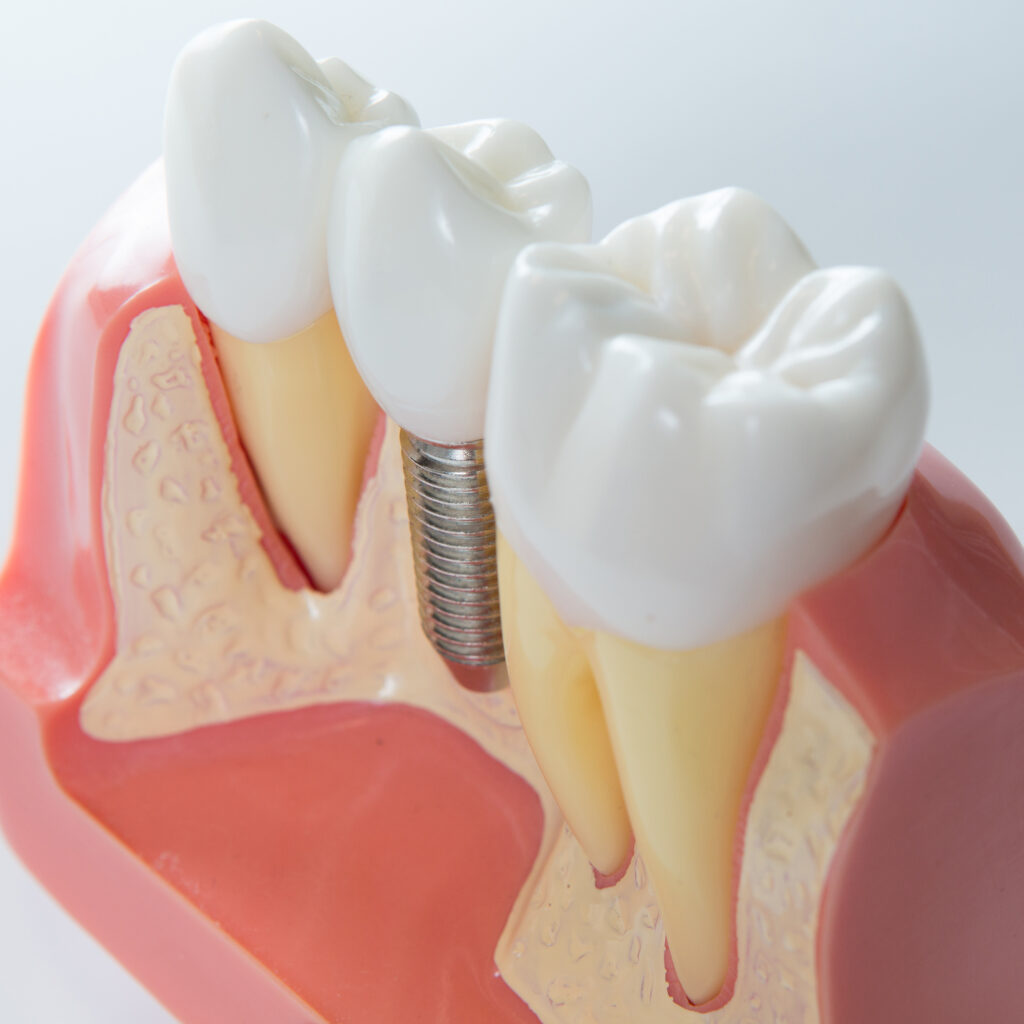
Over time, a missing tooth can cause neighboring teeth to shift, compromise your bite, and lead to significant jawbone loss in the area where the root once was. When it comes to replacing that tooth, two options come up most often: dental implants and dental bridges. Both restore function and appearance, but they work quite differently, and those differences have real implications for your long-term oral health.
At Lumiere Dental in Chicago, Dr. Ryan Woitas and our team look at every tooth replacement decision with your long-term well-being as the top priority. As a doctor-owned, community-based practice with comprehensive expertise in dental implant solutions, we believe that every patient deserves a clear, honest look at their options before any decision is made. The information below will help you understand the key differences between implants and bridges so you can move forward with confidence in your choice.
Understanding How Each Option Works
A dental bridge fills the gap left by a missing tooth by suspending a false tooth, called a pontic, between two dental crowns cemented onto the natural teeth on either side of the space. This requires the permanent reshaping of those neighboring teeth, whether or not they need any other treatment.
A dental implant, by contrast, replaces the tooth at the root level. A titanium post is surgically placed into the jawbone, where it fuses with the bone through a process called osseointegration over the course of several months. A custom-made crown is then secured on top, creating a freestanding, permanent restoration that looks, feels, and functions like a real tooth without relying on any surrounding teeth for support.
Comparing Long-Term Value
When weighing cost, durability, and impact on overall oral health, dental implants tend to offer a stronger return over time. A 20-year meta-analysis published through the National Institutes of Health found that dental implants consistently demonstrate survival rates exceeding 90% over the long term, while dental bridges typically need to be replaced every 10 to 15 years. These differences become even more significant when you consider the cumulative impact on both your budget and your surrounding teeth.
Here is a closer look at how the two compare:
- Longevity: Dental implants can last decades with proper care, while bridges generally require replacement within 10 to 15 years.
- Jawbone health: Implants preserve jawbone mass by naturally stimulating the bone in the same way that tooth roots do. Bridges do not address the bone loss that occurs beneath the gap.
- Impact on adjacent teeth: Bridges require permanently altering two neighboring healthy teeth, while implants are completely freestanding and leave surrounding teeth untouched.
- Long-term cost: Implants carry a higher upfront investment but tend to be less expensive overall when replacement cycles and potential complications are factored in.
At Lumiere Dental, every recommendation we make is guided entirely by your health and your goals — never by corporate quotas or investor demands. As a locally owned, doctor-operated practice, we have the freedom to put your long-term well-being first in every conversation.
When a Bridge Is the Right Choice
Dental bridges remain a strong and well-established option for many patients, and the right choice depends entirely on your individual situation. If you do not have sufficient jawbone density to support an implant, if certain health conditions make surgery inadvisable, or if you need a solution with fewer appointments and a shorter overall timeline, a bridge may be the better fit.
In some cases, when neighboring teeth already require restorative work, placing a bridge can address multiple concerns at once. Our approach at Lumiere Dental is also rooted in biomimetic dentistry, which means preserving as much of your natural tooth structure as possible is always part of how we evaluate your options, so our recommendation will always reflect what is most protective for your long-term health.
Start Your Smile Restoration at Lumiere Dental in Chicago
Dr. Ryan Woitas brings advanced expertise in implant placement, restorative care, and full-mouth rehabilitation to every patient consultation. With over 100 hours of continuing education, affiliations with five professional dental associations, and a patient-first philosophy that shapes every treatment plan, Lumiere Dental is the kind of locally owned practice where your health always comes first. Our state-of-the-art technology ensures precision, comfort, and faster treatment times, so you can trust that every procedure is designed to deliver lasting results.
Whether a single-tooth implant or a bridge is the right solution for your smile, our team is here to guide you through all your options and help you make a confident decision. Contact our office today to schedule your consultation and start your journey toward a healthier, more complete smile.