
A chipped tooth can happen in an instant, whether from biting into something hard, an unexpected bump, or years of general wear. Beyond the discomfort, the visual impact of a chipped tooth can affect how you feel about your smile and how you carry yourself day to day. The good news is that restoring a chipped tooth does not have to mean a lengthy or expensive process. At Lumiere Dental in Chicago’s Ukrainian Village neighborhood, we offer composite bonding as a fast, minimally invasive solution for bringing your smile back to life.
Composite bonding uses a tooth-colored resin material that is applied directly to the damaged tooth, shaped to match its natural contours, hardened with a curing light, and polished to a smooth finish. The result blends seamlessly with your surrounding teeth. For Illinois patients looking to repair a chip without committing to more extensive treatment, composite bonding is one of the most accessible and effective options available.
What Makes Composite Bonding a Good Option for Chipped Teeth?
When a tooth chips, patients often want a solution that is quick, natural-looking, and easy on the tooth structure. Composite bonding checks all of those boxes, and the reasons it works so well come down to both the material itself and how it is applied.
Does Composite Bonding Work Well on Front Teeth Specifically?
Composite bonding is particularly well-suited for front teeth, which are the most visible and most commonly chipped. The resin is color-matched to your natural enamel, so the repair is nearly invisible once complete. Because front teeth bear less direct chewing force than molars, the bonding material holds up reliably in this area, making it a go-to choice for anterior chips.
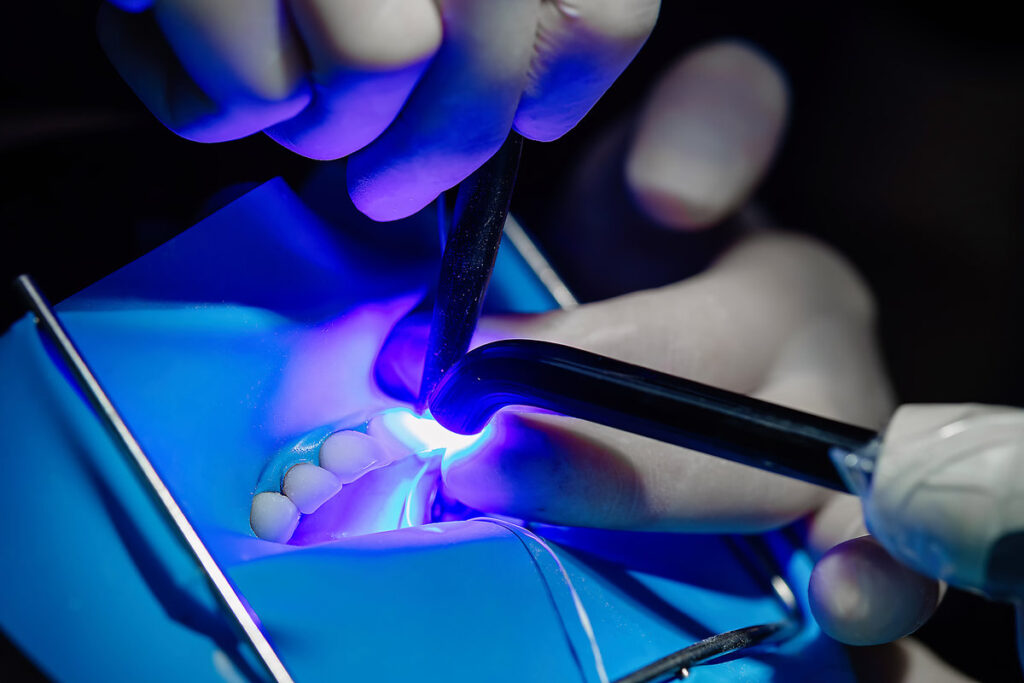
The placement process is straightforward. We gently prepare the surface of the tooth, apply the composite resin, sculpt it to recreate the natural shape of the chip, and cure it with a UV light. In most cases, the entire procedure is completed in a single visit with no anesthesia required, and you can return to your daily routine the same day.
How Does Composite Bonding Compare to Other Treatments for Chipped Teeth?
Not every chipped tooth requires the same level of intervention, and understanding how bonding stacks up against other options helps you make a confident, informed decision about your care.
When it comes to repairing a chipped tooth, patients often weigh bonding against options like porcelain veneers or dental crowns. Composite bonding stands out because it is the least invasive of the three. Veneers and crowns require removing a portion of healthy tooth enamel before placement, while bonding typically preserves the tooth structure entirely.
According to Penn Dental Family Practice, composite bonding is an effective and immediate solution for chipped teeth that allows patients to chew normally, looks like natural teeth, and requires no special maintenance beyond regular brushing and flossing (Penn Dental Family Practice, 2022). For patients with minor to moderate chips who want a reliable result without altering healthy enamel, bonding is often the right fit.
Can Composite Bonding Address More Than Just Chips?
Composite bonding is a versatile treatment, and many patients are surprised to learn how many cosmetic concerns it can effectively resolve beyond a simple chip repair.
What Other Cosmetic Concerns Can Bonding Correct?
While repairing chips is one of the most common uses for composite bonding, the treatment is also effective for closing small gaps between teeth, correcting minor discoloration, reshaping teeth that appear too short or uneven, and repairing small cracks. For patients considering a broader smile makeover in Chicago, bonding is often incorporated as one component of a more comprehensive cosmetic plan.
Its versatility is one reason we frequently recommend composite bonding as a starting point for patients who are unsatisfied with one or two specific areas of their smile. It allows for meaningful cosmetic improvement with minimal commitment, and if your goals evolve over time, bonding can be reversed or upgraded without complications.
See What Composite Bonding Can Do for Your Smile at Lumiere Dental
At Lumiere Dental, Dr. Ryan Woitas, DMD, brings over 100 hours of continuing education and a commitment to biomimetic, minimally invasive dentistry to every procedure. His approach focuses on preserving healthy tooth structure while delivering results that look and function naturally. Whether you have a single chip you have been putting off or several cosmetic concerns you want to address together, we are here to walk you through your options in a welcoming, patient-centered environment. Our practice is doctor-owned, family-run, and deeply committed to serving the Ukrainian Village and greater Chicago community.
To schedule your consultation, visit our contact page to request an appointment online. We look forward to helping you feel confident in your smile again.