
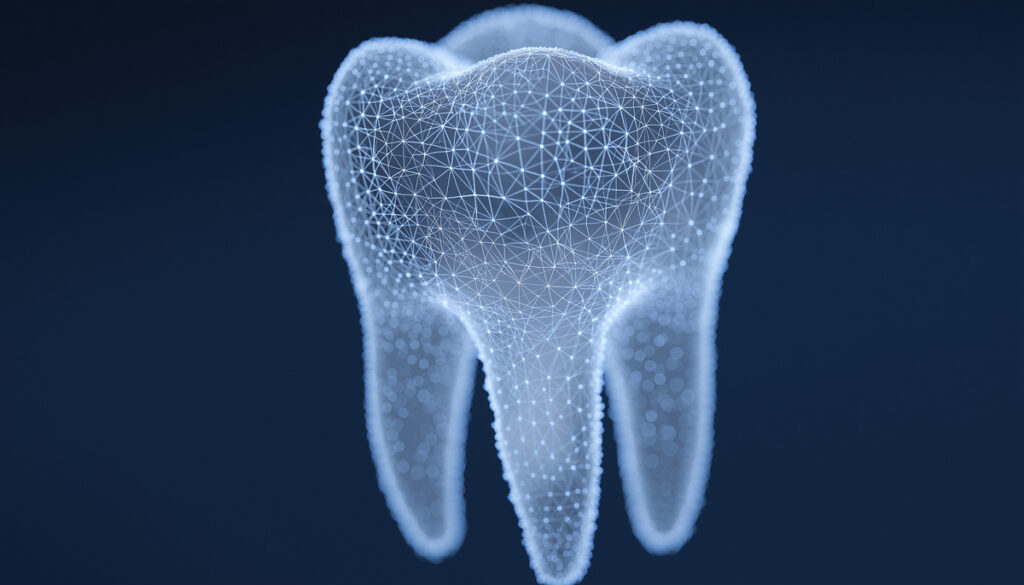
Biomimetic dentistry mimics the natural structure and function of your teeth to restore damaged areas while preserving as much healthy tooth structure as possible. This approach uses advanced materials and minimally invasive techniques to rebuild teeth, closely replicating their original strength and flexibility. The result is a restoration that functions like a natural tooth and prevents future damage.
At Lumiere Dental, Dr. Ryan Woitas has completed over 100 hours of continuing education and specializes in biomimetic dentistry, providing patients with the most conservative and effective treatment options. As the owner and operator of the practice, Dr. Woitas combines cutting-edge technology with personalized care to ensure every restoration protects your natural tooth structure for years to come.
Understanding the Biomimetic Approach
The term biomimetic comes from “bio,” meaning life, and “mimetic,” meaning to imitate. In dentistry, this means recreating the natural properties of teeth rather than simply filling or covering damaged areas. Traditional dental treatments often remove large amounts of healthy tooth structure to accommodate restorations. Biomimetic dentistry takes a different path by preserving what’s healthy and using materials that bond to your tooth and flex naturally with it.
Your teeth have layers with different properties. Enamel is hard and protective. Dentin beneath the enamel is slightly flexible and absorbs the forces of chewing. When a restoration doesn’t account for these natural characteristics, teeth can crack or fail over time. Biomimetic techniques restore each layer with materials that replicate its original function, creating a stronger, more durable result.
How Biomimetic Dentistry Differs From Traditional Methods
Traditional dentistry often relies on full-coverage crowns and extensive drilling to treat damaged teeth. These methods can weaken the tooth by removing too much structure. A tooth that has been significantly reduced for a crown may become more prone to fracture or sensitivity.
Biomimetic dentistry focuses on conservation. Instead of removing large portions of the tooth, your dentist removes only the damaged or decayed areas. The remaining healthy structure is then restored using adhesive materials that bond directly to the tooth. This creates a seal that protects against bacteria and reinforces the tooth without compromising its integrity.
The materials used in biomimetic dentistry also play a critical role. Composite resins and ceramics are chosen for their ability to mimic the mechanical properties of natural tooth structure. These materials flex with your tooth during chewing, reducing stress concentrations that can lead to cracks.
Benefits of Preserving Natural Tooth Structure
Keeping as much of your natural tooth as possible offers several advantages. Teeth with more remaining structure are generally stronger and last longer. When your tooth retains its natural shape and thickness, it can better withstand the forces of biting and chewing.
Sensitivity is another concern with traditional restorations. Removing large amounts of tooth structure can expose the inner layers of your tooth, leading to discomfort with hot or cold foods. Biomimetic restorations minimize this risk by preserving your tooth’s protective layers and creating a tight seal against external stimuli.
The bonding process used in biomimetic dentistry creates a strong connection between the restoration and your tooth. This bond distributes forces evenly across the tooth, preventing the stress fractures that can occur with traditional crowns or fillings. Over time, this means fewer repairs and a lower likelihood of needing more invasive treatments, such as root canal treatment.
Common Procedures Using Biomimetic Techniques
Biomimetic dentistry can be applied to a wide range of treatments. Composite fillings are one of the most common applications. Instead of removing healthy tooth structure to create retention for amalgam fillings, composite materials bond directly to the tooth. This allows for smaller, more conservative preparations.
Onlays and inlays are another option. These restorations cover only the damaged portion of the tooth rather than the entire chewing surface. They preserve more of your natural tooth while providing excellent strength and durability.
Even broken teeth benefit from biomimetic principles. When a tooth fractures, the goal is to stabilize it without removing additional structure. Adhesive techniques can often bond fractured pieces back together or rebuild the tooth with materials that restore its original function.
Long-Term Advantages for Your Oral Health
Biomimetic dentistry supports better long-term outcomes. By preserving healthy tooth structure, you reduce the need for future treatments. Teeth that maintain their natural integrity are less likely to develop complications over time.
The adhesive seal created in biomimetic restorations also protects against decay. Traditional fillings can develop gaps where bacteria enter and cause secondary cavities. Bonded restorations create a barrier that keeps bacteria out and maintains your tooth’s health.
Another benefit is the reduced need for full-coverage crowns. While crowns have their place in dentistry, they require a significant reduction of the tooth. Biomimetic techniques often allow you to avoid this step, keeping more of your natural tooth and potentially delaying or eliminating the need for more extensive work later.
Is Biomimetic Dentistry Right for You?
Most patients with damaged or decayed teeth can benefit from biomimetic dentistry. If you have a cavity, crack, or fracture, this approach offers a conservative solution that prioritizes preservation. The techniques work well for both front and back teeth and can address everything from minor decay to more extensive damage.
Your dentist will evaluate your specific situation to determine the best treatment plan. Factors like the extent of damage, the location of the tooth, and your overall oral health all play a role. In many cases, biomimetic methods provide a superior alternative to traditional approaches.
Experience Biomimetic Dentistry at Lumiere Dental
Dr. Woitas uses biomimetic principles to deliver restorations that look natural, feel comfortable, and last longer. His commitment to advanced techniques and continuing education ensures you receive care that prioritizes your long-term oral health. By focusing on preservation rather than replacement, biomimetic dentistry helps you maintain your natural smile for years to come.
Tooth sensitivity often develops when protective layers are compromised, making biomimetic approaches particularly valuable for maintaining comfort while restoring function. If you’re ready to explore how biomimetic dentistry can benefit you, contact us to schedule a consultation. Learn more about Dr. Woitas and discover how his expertise can help preserve your natural teeth.